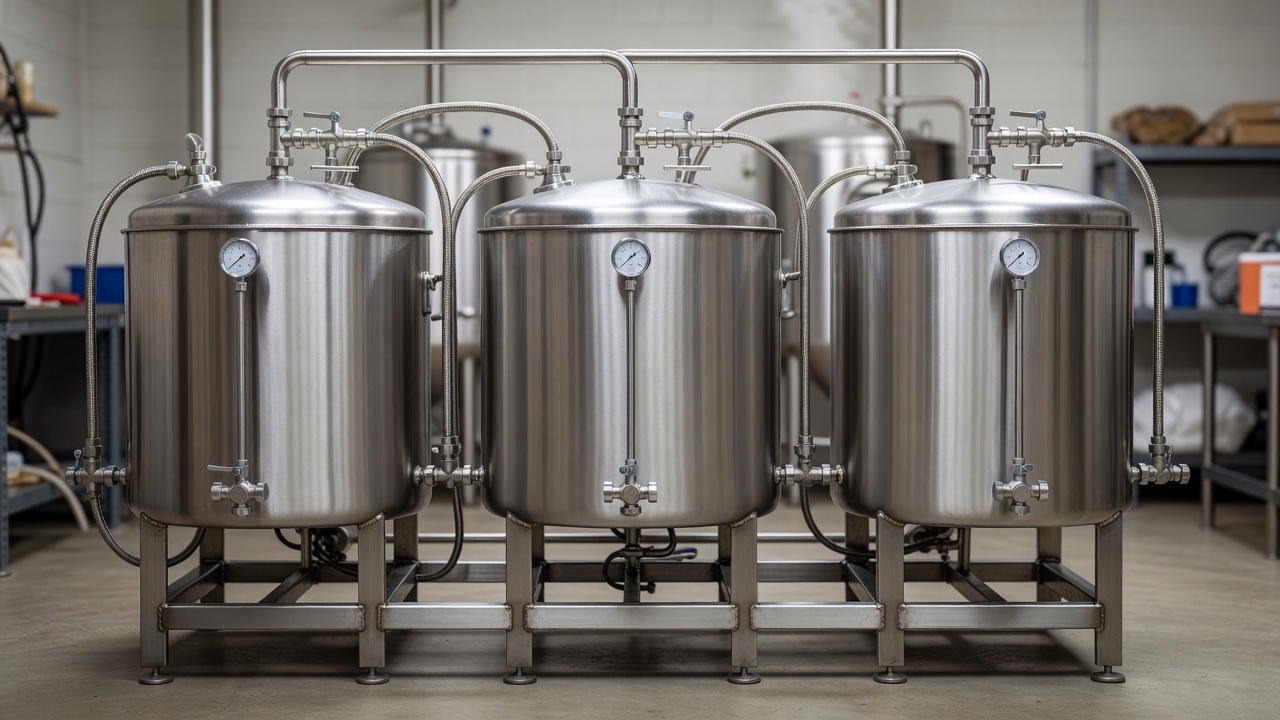
Transitioning from extract brewing to all-grain brewing is widely considered a rite of passage for the dedicated home brewer. In all-grain brewing, you are responsible for extracting the fermentable sugars from crushed malted barley yourself, using a process called mashing. While this requires a larger time commitment on brew day, it offers unparalleled control over your beer's flavor, color, body, and fermentability.
To achieve this, you need to expand your equipment roster. The hardware can range from a single bag in a kettle to automated, multi-vessel electric systems. Here is a comprehensive look at the equipment categories you will encounter when making the jump.
The Mash Tun
The mash tun is the vessel where the mashing takes place. Crushed grain is mixed with hot water (usually between 148°F and 156°F) and held at a precise temperature for roughly an hour. The enzymes in the malt convert complex starches into fermentable sugars.
- Converted Coolers: The most common entry point for traditional all-grain brewing is a modified beverage cooler (cylindrical or rectangular). Coolers hold temperature exceptionally well over the hour-long mash. They are typically fitted with a ball valve for draining and a filtration device inside.
- Stainless Steel Tuns: More advanced setups use dedicated stainless steel kettles as mash tuns. Since stainless steel loses heat faster than a plastic cooler, these setups often incorporate active heating elements or direct fire, usually paired with a recirculation pump to maintain even temperatures.
Filtration: False Bottoms and Manifolds
When the mash is complete, you must separate the sweet liquid (wort) from the solid grain husks. This is done through a filtration system built into the bottom of the mash tun.
- False Bottoms: A perforated metal dome or plate that sits at the bottom of the tun. It allows liquid to pass through while holding back the grain bed. They are highly efficient but can be prone to "stuck sparges" (clogging) if the grain is crushed too finely.
- Stainless Steel Braid: A cheaper alternative often used in cooler setups. A piece of braided stainless steel hosing acts as a flexible filter.
- Manifolds: A grid of copper or CPVC pipes with slits cut into the bottom, custom-built to match the shape of the cooler.
The Hot Liquor Tank (HLT)
The "Hot Liquor Tank" is simply a vessel for heating and holding water ("liquor" in brewing terminology). After draining the initial wort from the mash tun, you must rinse the remaining sugars from the grain bed using hot water. The HLT holds this sparge water at the precise temperature required (usually around 170°F).
While a large pot on a stovetop can act as an HLT, dedicated three-vessel systems use a specific kettle for this, often equipped with its own thermometer, sight glass, and heating element.
Brew in a Bag (BIAB)
If purchasing three separate vessels sounds intimidating or too expensive, "Brew in a Bag" is a highly popular alternative. BIAB condenses the entire process into a single kettle.
A large, fine-mesh nylon bag is placed inside the brew kettle, and the mashing occurs directly within it. Once the mash is complete, the brewer hoists the bag out of the kettle, allowing the wort to drain out. The remaining liquid in the kettle is then boiled. BIAB drastically reduces the equipment footprint and cost while still providing the full benefits of all-grain recipe design.
Pumps and Chilling
As you move to larger batch sizes (5 gallons to 10 gallons or more), moving hot liquid by hand becomes dangerous and impractical.
- Brewing Pumps: Magnetic drive pumps with high-temperature food-grade heads are used to move water from the HLT to the mash, recirculate wort during the mash, and transfer boiling wort to the fermenter.
- Wort Chillers: While an ice bath works for extract batches, all-grain boils require more efficient chilling. Immersion chillers (copper or stainless coils placed into the boil) are common. Advanced brewers use counter-flow or plate chillers, which pump hot wort in one direction and cold water in the other, chilling the beer instantly as it travels to the fermenter.
Upgrading to all-grain is an investment in your craft. Whether you opt for a simple BIAB setup or build a sophisticated three-vessel brewery in your garage, the satisfaction of designing a beer entirely from scratch is well worth the effort.