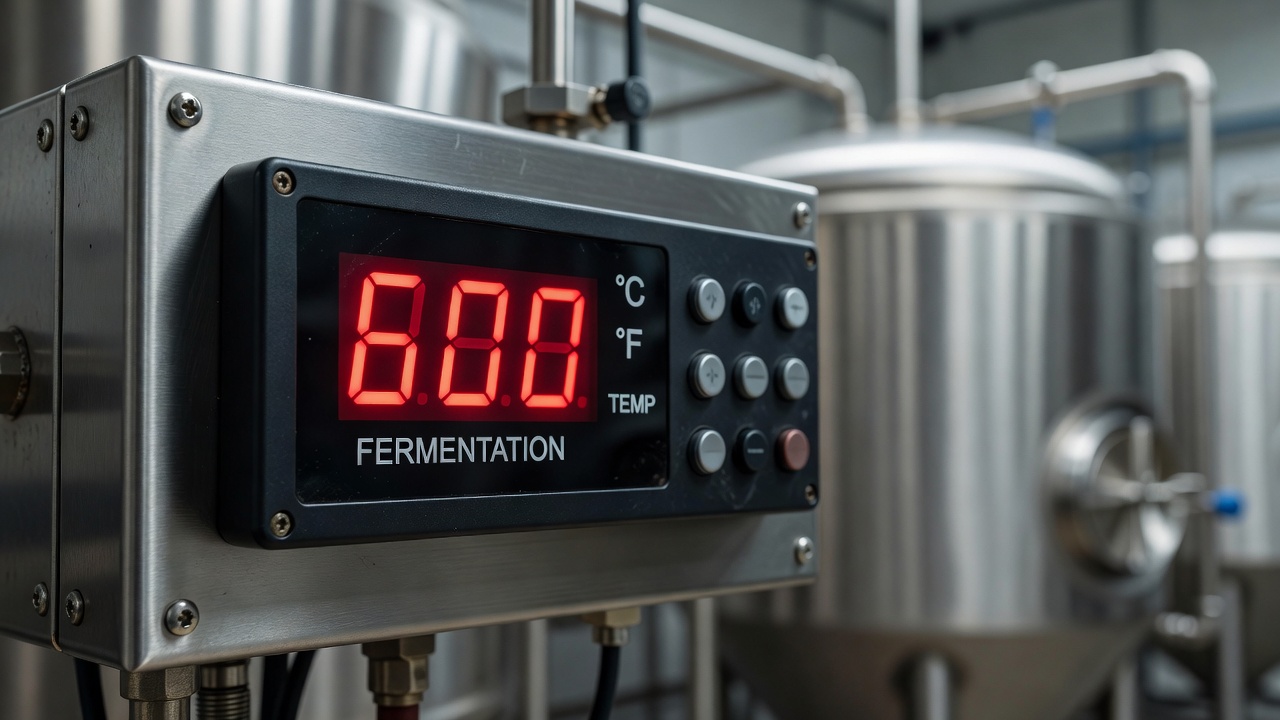
There is an old saying in this hobby: "Brewers make wort, yeast makes beer." You can source the most expensive malts, meticulously adjust your water chemistry, and time your hop additions to the second, but if you treat your yeast poorly, the resulting beer will be mediocre at best. The single most crucial factor in keeping your yeast happy and productive is strict fermentation temperature control.
Why Temperature Matters
Yeast are living organisms, and they are highly sensitive to their environment. As they consume sugars and multiply, they produce more than just alcohol and carbon dioxide; they produce a variety of flavor compounds, including esters (fruity flavors) and phenols (spicy or medicinal flavors).
When fermented within their ideal temperature range (typically 65°F to 68°F for most ale strains), yeast produce a balanced, clean profile. However, if the temperature rises too high, several problems occur:
- Overproduction of Esters: A clean pale ale can suddenly taste like a banana or bubblegum bomb.
- Fusel Alcohols: High temperatures encourage the production of heavier alcohols, which taste harsh or solvent-like and are notorious for causing severe hangovers.
- Stress and Off-Flavors: Yeast stress can lead to the production of diacetyl (buttery flavor) or acetaldehyde (green apple flavor) that fails to clean up at the end of fermentation.
Conversely, if the temperature drops too low, the yeast may go dormant, resulting in a "stalled" fermentation where unfermented sugars are left behind, creating an overly sweet, under-attenuated beer.
The Heat of Fermentation
One of the most common mistakes beginners make is relying on ambient room temperature. If your closet is 68°F, you might assume your beer is fermenting at 68°F. However, fermentation is an exothermic process—it generates its own heat. During the peak of active fermentation, the temperature inside your vessel can rise 5 to 10 degrees Fahrenheit higher than the surrounding air. Therefore, an ambient room of 68°F can easily result in a beer fermenting at a harsh 75°F.
Methods of Temperature Control
Achieving stable temperatures ranges from simple, low-tech solutions to automated refrigeration systems.
1. The Water Bath (Low Tech)
The most accessible method for beginners involves placing the fermentation bucket into a larger plastic tub filled with water. Water has a high specific heat capacity, meaning it resists temperature changes much better than air. This buffers the heat generated by the yeast. To lower the temperature further, you can drape a wet t-shirt over the fermenter and let a fan blow on it (evaporative cooling), or swap frozen water bottles into the bath daily.
2. Fermentation Chambers (Intermediate)
The standard for serious home brewers is a dedicated fermentation chamber. This is usually a second-hand chest freezer or mini-fridge. Because these appliances are designed to cool down to freezing temperatures, they must be overridden to maintain ale temperatures.
This is accomplished using an external temperature controller (such as an Inkbird). The controller's temperature probe is taped securely to the side of the fermenter (insulated with a piece of foam so it reads the beer temp, not the air temp). You plug the fridge into the controller. When the beer temp rises above your set point, the controller turns the fridge on. When it drops, it cuts the power. Some brewers also add a small heating pad inside the chamber, allowing the controller to heat the space in winter.
3. Glycol Chillers (Advanced)
Commercial breweries use massive stainless steel conical fermenters wrapped in cooling jackets. A central chiller pumps cold propylene glycol through these jackets to maintain precise temperatures. Scaled-down versions of this technology are now available for home brewers. Glycol chillers allow for independent, highly accurate temperature control across multiple stainless steel fermenters simultaneously, representing the pinnacle of home brewery thermal management.
The Cold Crash
Once fermentation is complete, having temperature control provides a secondary benefit: the cold crash. By dropping the temperature of the finished beer to near freezing (around 35°F) for a few days before packaging, you encourage yeast, hop matter, and proteins to rapidly drop out of suspension. The result is a brilliantly clear beer that rivals commercial clarity without the need for mechanical filtration.
Investing in temperature control—even if it is just a tub of water and a thermometer—will elevate your home brewing more noticeably than any other equipment upgrade.