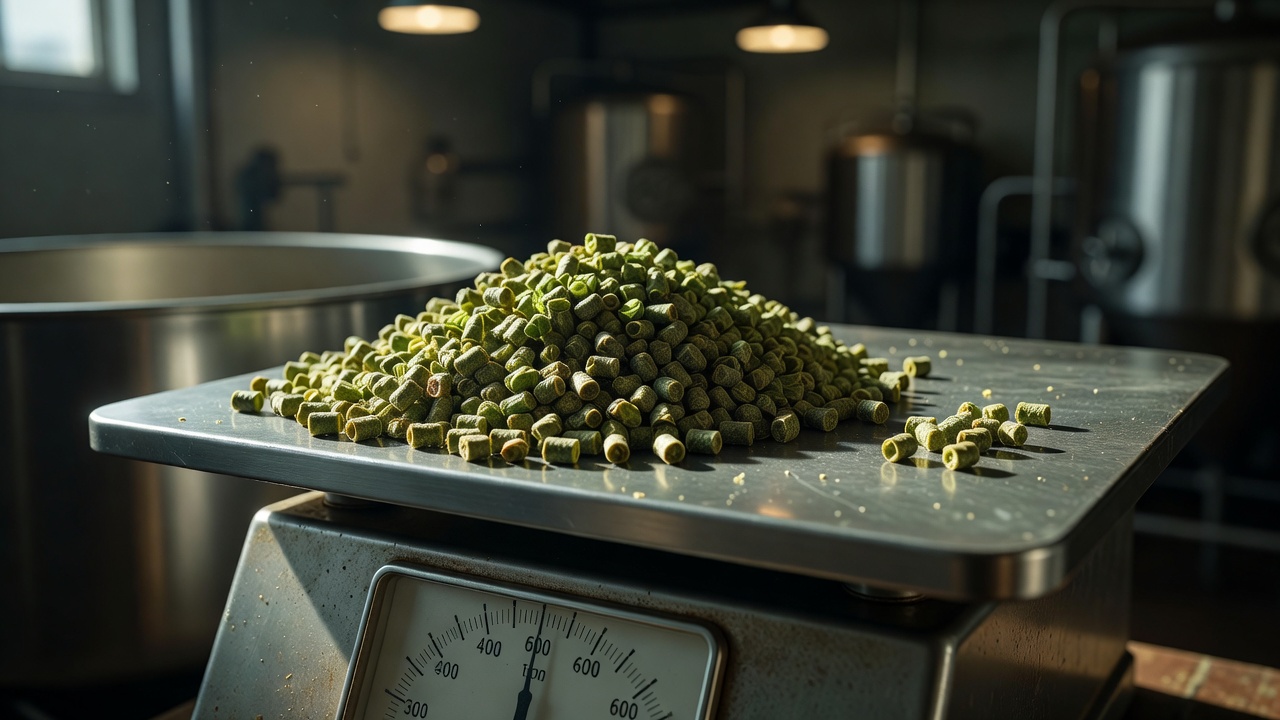
Hops are the spice of beer. These small, green, cone-like flowers belong to the Cannabaceae family and provide the essential bitterness needed to balance the sweet sugars extracted from malted grains. However, modern brewing utilizes hops for much more than just a bitter counterbalance; they are responsible for the exploding arrays of citrus, pine, tropical fruit, and floral notes found in contemporary craft beer.
To manipulate what a hop brings to the final beverage, brewers rely entirely on when the hop is added to the brewing process. The heat of the boil drives specific chemical reactions, transforming hop resins and oils in different ways depending on exposure time.
The Chemistry: Alpha Acids and Essential Oils
Hops contain two primary compounds of interest to brewers: alpha acids and essential oils. Alpha acids are not inherently bitter, but when exposed to boiling temperatures for an extended period, they undergo a chemical change called isomerization. Isomerized alpha acids provide the sharp bitterness in beer.
Essential oils, on the other hand, provide flavor and aroma. These oils (such as myrcene, humulene, and caryophyllene) are highly volatile. This means that if they are exposed to a rolling boil, they will vaporize and be scrubbed out of the kettle via steam in a matter of minutes.
Understanding this dichotomy—heat creates bitterness but destroys aroma—is the key to hop scheduling.
Bittering Additions (60 Minutes)
The standard time to extract maximum bitterness is 60 minutes of boiling. Hops added at the very beginning of a one-hour boil will have nearly all of their essential oils vaporized, contributing virtually zero flavor or aroma to the final product. Instead, the prolonged heat maximizes the isomerization of alpha acids.
Brewers typically choose hops with high alpha acid percentages for this step to achieve the desired bitterness (measured in International Bitterness Units, or IBUs) using the least amount of plant matter possible.
Flavor Additions (15 to 30 Minutes)
If you add hops midway through the boil, you achieve a compromise. Boiling for 15 to 30 minutes provides enough heat to isomerize some alpha acids (yielding moderate bitterness), but not enough time to boil off all the essential oils. The oils that remain impart distinct hop flavors into the wort—think earthy, spicy, or resinous notes.
Aroma Additions (0 to 10 Minutes)
To capture the delicate aromas of a hop, it must be protected from extended heat. Hops added in the final 5 to 10 minutes of the boil contribute minimal bitterness but leave behind strong aromatic profiles.
Many modern IPAs utilize a "flameout" or "whirlpool" addition. The heat is turned off (flameout), and hops are added as the wort begins to cool. At temperatures just below boiling, isomerization drops off rapidly, but the hot liquid continues to dissolve and steep the essential oils, locking in massive citrus and tropical aromas without increasing IBUs.
Dry Hopping
To maximize aroma without any heat interference whatsoever, brewers utilize dry hopping. This technique involves adding hops directly into the fermentation vessel after the initial turbulent phase of fermentation has subsided.
Because the beer is at room temperature (or cooler), absolutely no isomerization takes place; zero bitterness is added. Instead, the alcohol and water in the beer slowly extract the most delicate essential oils over several days. Dry hopping is the secret behind the pungent, room-filling aromas of New England IPAs and modern Pale Ales.
Crafting a Schedule
A classic West Coast IPA recipe utilizes all these techniques: a large 60-minute addition for firm bitterness, a 15-minute addition for piney flavor, a heavy whirlpool addition for citrus aroma, and a generous dry hop before packaging. Conversely, a traditional Stout might only feature a single 60-minute bittering addition, as the brewer wants the roasted malts, not hop aromas, to be the star of the show. By manipulating time, temperature, and quantity, the modern brewer has a massive palette of flavors to explore.